


-
Q1What new energy products does MPMC offer?
-
MPMC's new energy portfolio covers five product families:
- Mobile BESS Chargers (BCH Series) - battery energy storage combined with EV charging guns in one mobile unit, from BCH-80-70 up to BCH-500-1000.
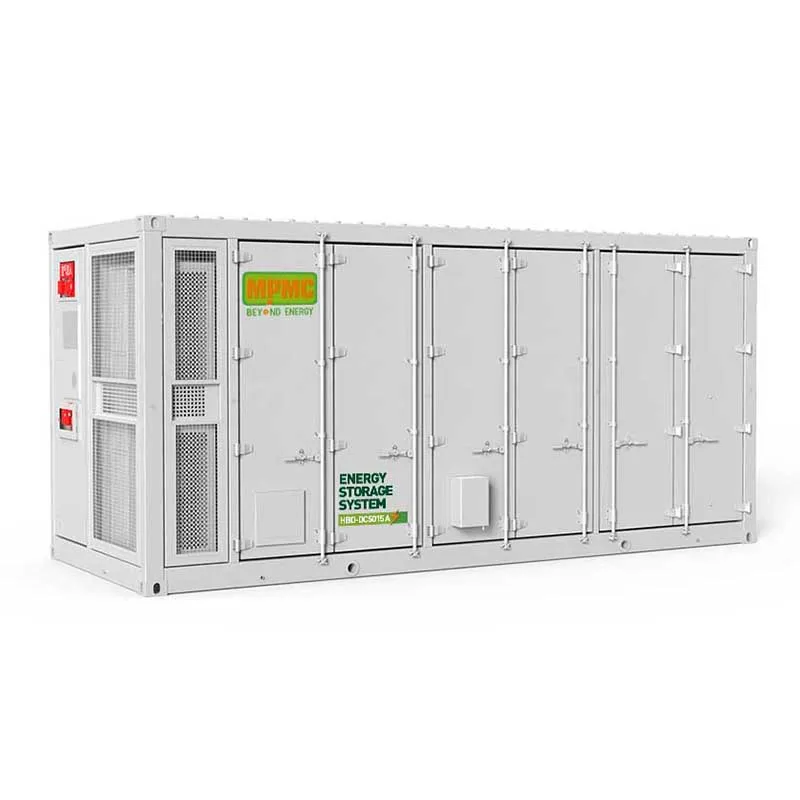
- Battery Energy Storage Systems (HBD Series) - HBD-A stationary grid-connected, HBD-E all-in-one for houses and small C&I, HBD-R mobile for rental and genset pairing.
- Hybrid Power Stations (GSB / GB Series) - GSB integrates generator, solar and battery; GB combines generator and battery.
- Mobile Solar Plants (SPK Series) - standalone PV arrays from 7.65 kWp to 231.84 kWp.
- Solar and Hybrid Light Towers (HSL / HBL Series) - fully solar-powered towers and the X-Matrix diesel+battery hybrid lighting system.
Diesel, gas, methanol and biofuel generator sets, diesel light towers and cold chain generator sets are covered on the MPMC power generation site at www.mpmc-china.com.
-
-
Q2Which markets and industries does MPMC serve?
-
MPMC's products have been delivered to over 120 countries and territories across Asia, Africa, Oceania, the Americas and Europe. Documented application sectors include mining, oil and gas, construction, rental power, events, healthcare, data centers, cold chain logistics, commercial and industrial buildings, island power stations, municipal infrastructure, banking and telecommunications.
-
-
Q3What is the difference between the HBD-A, HBD-E and HBD-R battery energy storage series?
-
Series Form Primary Use Cycle Life Cooling HBD-A Stationary Large-scale C&I grid-connected, frequency regulation, peak shaving 8,000 cycles @90% DOD Liquid cooling HBD-E Stationary House and small C&I self-consumption, backup power, small hybrid 6,000 cycles @90% DOD HVAC / HVLC (HBD-125-260) HBD-R Mobile Rental market, genset mate, construction and events 6,000 cycles @90% DOD HVAC (small) / LCAC (large) All three series use LiFePO₄ (LFP) cells and an integrated EMS. HBD-A is the flagship for large commercial and industrial grid-connected applications (125 kW-1,125 kW AC, 261 kWh-2,170 kWh per unit, with 418 kWh and 5,015 kWh DC-coupled variants). HBD-E integrates inverter, PCS and EMS in a single cabinet for smaller sites (12 kW-125 kW AC, 30.7-261.2 kWh). HBD-R is purpose-built for rental, with a ruggedised structure, millisecond-level transient load smoothing and easy maintenance (30 kW-610 kW, 61.44-610.6 kWh).
-
-
Q4Which HBD-A model should I choose for a grid-connected project?
-
Model Rated AC Power Battery Capacity Cooling Cycle Life HBD-125-260 125 kW 261 kWh Liquid 8,000 @90% DOD HBD-210-410 210 kW 418 kWh Liquid 8,000 @90% DOD HBD-250-1000 250 kW 1,045 kWh Liquid 8,000 @90% DOD HBD-500-1000 500 kW 1,045 kWh Liquid 8,000 @90% DOD HBD-1000-2000 1,125 kW 2,170 kWh Liquid 8,000 @90% DOD HBD-DC 410 DC-coupled (0.5P) 418 kWh Liquid 8,000 @90% DOD HBD-DC 5000 DC-coupled (0.5P) 5,015 kWh Liquid 8,000 @90% DOD All HBD-A models use LFP 314Ah cells, operate from -20°C to +55°C up to 3,000 m, are rated IP54 at system level and IP67 at battery pack level, and use aerosol (CE) fire suppression. Rated voltage is 400 Vac/3P as standard, with 690-800 Vac/3P on the HBD-210-410. Contact MPMC with your load profile and tariff structure for a sizing recommendation.
-
-
Q5Which BCH Mobile BESS Charger model should I choose for my application?
-
Model DC Charging Output Battery Capacity Best For BCH-80-70 80 kW 70 kWh Light EVs, compact machinery, temporary site power BCH-60-70 N/A (AC output 30 kW) 70 kWh Light EVs, compact machinery, temporary site power BCH-275-200 150 kW DC 203.5 kWh Port logistics, medium construction machinery, off-grid EV charging BCH-600-400 400 kW DC 407 kWh Heavy-duty construction machinery, mining support BCH-800-600 600 kW DC 610.6 kWh High-intensity industrial machinery, 1C rapid charge/discharge BCH-500-1000 500 kW DC 1,075 kWh Large-scale off-grid power hubs, electric truck charging stations All BCH models except the BCH-80-70 accept AC input from the grid, gensets, BESS or solar. The BCH-275-200 and above include aerosol (CE) fire protection. Every model uses LCAC liquid cooling, is controlled by an EMS with 4G, and reaches full operational status within 24 hours of arrival on site.
-
-
Q6What makes the BCH blade battery different from a standard battery pack?
-
All BCH models use blade LFP battery packs with three documented design advantages:
- Ultra-strong "sandwich" architecture: a specialised high-strength structure delivering extreme structural rigidity, fully tested for fire, water immersion, high-impact collision and crush.
- Thermal excellence: 65% larger heat dissipation area, 6.7°C precision temperature control (an industry-leading low variance), and 390 Wh/L energy density.
- DC-side coupling: direct DC coupling delivers up to 87% discharge efficiency, with AC-to-DC conversion specifically optimised for electric construction machinery.
The fully sealed liquid-cooled pack also prevents dust ingress, which is why the series suits mines and construction sites.
-
-
Q7Can MPMC supply a complete hybrid power solution with generator set, BESS and solar together?
-
Yes. MPMC supplies fully integrated hybrid systems as a one-stop supplier:
- GSB Series (genset + solar + battery): 10-120 kVA max output, 20.4-112.5 kWh battery, integrated 2,375 W slide-out PV array, highly mobile. Engine options PERKINS, KUBOTA or YANMAR, with seamless switchover between diesel and PCS.
- GB Series (genset + battery): the same power and battery range without the slide-out solar array (MPPT optional), extending up to GB-125P (250 kVA, 215 kWh) and GB-250P (500 kVA, 430.1 kWh, SCANIA S5 available at 250 kVA).
- Microgrid / large hybrid power plants: custom configurations combining containerised gensets, HBD-A BESS, SPK solar arrays, SCADA and EMS up to multiple MW scale - the reference project is a 6 MW, four-site microgrid in Kenya.
All systems are supported by MPMC's self-developed SCADA and EMS with real-time remote monitoring, StarLink backup communication and an SL3-level cybersecurity framework.
-
-
Q8Which SPK Mobile Solar Plant model fits my site?
-
Model PV Module Array Power Rec. Inverter Expansion Net Weight SPK-8A 510 W HJT 7.65 kWp 5 kWe Automatic 1,100 kg SPK-10 480 W HJT 10.56 kWp 8 kWe Manual 1,600 kg SPK-20 590 W bifacial 21.24 kWp 16 kWe Manual 5,000 kg SPK-120 630 W bifacial 115.92 kWp 80 kWe Manual (20HQ container) 15,000 kg SPK-240 630 W bifacial 231.84 kWp 180 kWe Manual (40HQP container) 30,000 kg The SPK-8A is a clip-on container solar roof that expands automatically; the SPK-10, SPK-20, SPK-120 and SPK-240 are containerised solar plants. All models are compatible with MPMC BESS and inverters and use MC4 connectors as standard. Product warranty is 2 years from delivery; PV panels and inverters follow the original OEM factory warranty.
-
-
Q9What solar and hybrid light towers does MPMC offer?
-
HSL Series - 100% green power. A fully solar-powered, zero-emission mobile lighting tower.
Model Lamps & Coverage Battery Run Time Solar Panel Mast HSL-1000A 4×100 W LED, 12,000 m² 4.8 kWh GEL 12 h 1,170 W 7.2 m hydraulic HSL-1000B 4×100 W LED, 12,000 m² 5.12 kWh LFP 12 h 1,170 W 7.2 m manual HSL-1440B 4×150 W LED, 18,000 m² 16.07 kWh LFP 26 h 1,440 W 7.2 m manual HSL-1920B 4×150 W LED, 18,200 m² 16.07 kWh LFP 26 h 1,920 W 9.0 m hydraulic HSL-2880B 4×200 W LED, 24,100 m² 16.07 kWh LFP 20 h 2,880 W 9.0 m hydraulic HSL-3840B 4×200 W LED, 24,100 m² 32.14 kWh LFP 40 h 3,840 W 9.0 m hydraulic HSL-1500B 4×100 W LED, 12,000 m² 8.0 kWh LFP 20 h 1,525 W 7.5 m hydraulic HBL X-Matrix Series - 1 main hybrid tower + X sub battery towers. The HBL-600D-M pairs a Kubota Z482-3B 6 kW diesel genset with an 8 kWh LiFePO₄ battery, 4×150 W LED at 200 Lm/W covering 18,200 m², 53-hour maximum run time, a 130 L fuel tank giving 420-hour autonomy and a 9.0 m / 355° hydraulic mast. The HBL-600D-S is the battery-only sub tower. Both offer dual-mode CCT switching, adaptive brightness control and a light-controlled timer. Optional 4G and CCTV enable unattended operation.
-
-
Q10Does MPMC offer products suitable for the rental market?
-
Yes. The HBD-R Series BESS and the BCH Series Mobile BESS Charger are for the rental market. Rental-oriented features include:
- Ruggedised structure for repeated transport and deployment
- Forklift pockets and standard container footprints for easy logistics
- Plug-and-play connections (PowerLock, CEE sockets) for rapid on-site setup
- Remote monitoring via EMS with 4G
- Up to 50% lower operation and maintenance cost
- Compatible with major genset controller brands (DSE, ComAp, DEIF, Woodward, Smartgen, CAT EMCP and others)
MPMC sells equipment to rental companies and contractors; MPMC does not operate rental services itself.
-

Language
Frequently Asked Questions
Answers on MPMC mobile BESS chargers, HBD battery energy storage systems, hybrid power stations, mobile solar plants and solar/hybrid light towers. Click a question to open the answer.
Part APre-Sales & Product Selection
Part BTechnical Questions
-
Q11What certifications do MPMC new energy products hold?
-
- Company-level: ISO 9001:2015 Quality Management, ISO 45001 Occupational Health & Safety, ISO 14001 Environmental Management, a CNAS-accredited testing center at the Haimen facility, WMI, ARCADIS and ilac MRA.
- Product-level: CE (Europe), TUV, SGS, UN38.3 (battery transport), SABER (Saudi Arabia), BV (France Bureau Veritas), China TLC, Nigeria SONCAP, UL and Russian Customs Union certification.
- HBD-E Series: CE, IP54 and CEC (Australia).
For product-specific certificates and documentation, contact MPMC with your target market and model.
-
-
Q12What are the operating temperature and altitude limits for MPMC new energy products?
-
Product Series Operating Temp Max Altitude Derating Note HBD-A Series BESS -20°C to +55°C ≤3,000 m Derating >45°C and >2,000 m HBD-E Series BESS -20°C to +55°C (-25°C to +50°C on HBD-12-30 / HBD-10-30) ≤3,000 m Derating >45°C and >2,000 m HBD-R Series BESS (small) -20°C to +50°C ≤3,000 m Derating >45°C and >2,000 m HBD-R Series BESS (large 1C) -20°C to +50°C ≤3,000 m Derating >50°C and >2,000 m BCH-80-70 / BCH-60-70 -20°C to +55°C ≤4,000 m Derating >40°C and >2,000 m BCH-275-200 and above -20°C to +50°C ≤3,000 m Derating >45°C and >2,000 m For extreme environments such as the Middle East (50°C+) or high-altitude mining sites, MPMC provides customised solutions including upgraded cooling and altitude derating calculations. In the Dubai project the HBD-500-1000 operates 24/7 at 45-50°C with IP54 system and IP67 battery pack protection. Contact sales with your site conditions.
-
-
Q13How does a BESS + genset hybrid system save fuel in practice?
-
The core principle: diesel engines reach their most fuel-efficient operating point only at 75-100% load. At partial load (25% or below) specific fuel consumption rises sharply. The BESS absorbs or supplements power so the genset stays at its optimal load point at all times.
From the Dubai off-grid concrete batching plant case (HBD-500-1000 with 3 × 500 kVA gensets, peak load 847.8 kW, average 409.0 kW, 24/7 operation at 45-50°C):
- Daily fuel saving: 254.13 litres per station
- Fuel reduction rate: 10.56%
- Annual fuel saving: ~92,757 litres per station
- Annual cost saving: ~USD $70,496 per station (at $0.76/L diesel)
- OPEX reduction: ~20%
- Genset life extension: 2-3 years
- CAPEX payback on the hybrid premium: 2-3 years
On a UK construction site where a 56 kW diesel generator was oversized for a 3-6 kW night load, adding a 30 kW / 60 kWh HBD-R extended refuelling from every 2 days to every 7 days and maintenance from every 10 days to every 60 days. HBD-R product data documents fuel savings of up to 75% and genset life extension of up to 3× in low-load scenarios.
-
-
Q14What grid-forming and grid-support functions do MPMC BESS systems support?
-
MPMC HBD-A and microgrid systems support the following operational modes, as documented in the Kenya 6 MW microgrid project:
- PQ mode: active and reactive power control for grid-connected operation
- VF mode: independent voltage and frequency control for off-grid operation
- VSG mode: virtual synchronous generator, emulating inertia to improve grid stability
- Black start: independent power restoration after a grid outage
- Grid-forming: creates a stable power network in areas with no grid
- Reactive power regulation: full-range reactive power absorption across all PCS units
- Peak shaving and load balancing: EMS-driven dispatch to reduce demand charges
- On-grid / off-grid switching: seamless as standard on the HBD-R series; gap switching by default on HBD-A, with seamless available as an option
-
-
Q15What is the BCH series' charging connector compatibility?
-
Model DC Charging Output Connector Standard Cable Length BCH-80-70 80 kW CCS2, 260A × 1 7 m BCH-60-70 N/A N/A N/A BCH-275-200 150 kW CCS2, 250A × 2 3.5 m BCH-600-400 400 kW CCS2, 350A × 2 6 m BCH-800-600 600 kW CCS2, 350A × 2 6 m BCH-500-1000 500 kW CCS2, 350A × 2 6 m Output voltage range is DC 50-1,000 V (DC 200-1,000 V on the BCH-80-70). The BCH-275-200 and above also accept CCS2 DC input for recharging from fast-charging stations - the BCH-275-200 recharges fully in approximately 1 hour via DC input. Optional CCS1, GB/T and CHAdeMO connectors are available for specific markets, and the charging gun supports simultaneous charge and discharge.
-
-
Q16What battery cell technology does MPMC use in its BESS products?
-
All MPMC BESS products use LiFePO₄ (lithium iron phosphate, LFP) cells. Standard cell capacities are 100Ah on small E-series and R-series models, 265Ah on the 1C R-series, and 314Ah across the standard A, E and R series. Pack voltage ranges from 51.2 Vdc (small R-series) through 64.0 Vdc (E-series mid), 153.6 Vdc (1C R-series) and 166.4 Vdc (A-series), with cluster voltage up to 1,331.2 Vdc on A-series HV models. The 8 MWh HBD-1000-2000A system delivered to Europe uses 45 CATL 1P52S battery packs per unit.
-
-
Q17Does MPMC's SCADA support remote monitoring, and what cybersecurity standard does it meet?
-
Yes. MPMC's self-developed SCADA provides real-time remote monitoring and control across all sites, alarm and fault management, maintenance management (early warnings, record tracking, spare-part warehouse management), automated monthly and annual reports, and customisable operation reports. It retains up to 10 years of data, operates on an SL3-level cybersecurity framework, and supports hierarchical account management and multi-site coordination. StarLink satellite communication is integrated as a backup link.
The EMS works alongside it, dynamically optimising the energy mix using multi-source data and weather forecasting, with the objectives of maximising PV generation, minimising diesel runtime and maximising storage response flexibility.
-
-
Q18How much CO₂ does a BCH unit save compared with a diesel generator?
-
In the documented UK case study, a BCH-275-200 delivered a total output of 3,457 kWh. Producing the same output with a standard 150 kW diesel generator would have consumed 976 litres of diesel and produced 3,123 kg of CO₂.
Power source (for 3,457 kWh) CO₂ emissions Relative to BCH + solar PV Diesel generator 3,123 kg 22× more UK grid average (2024) ~725 kg 4.3× more UK grid (gas peaking) ~527 kg - Solar PV (lifecycle) ~144 kg baseline On this basis the BCH-275-200 in the UK case saves at least 37.5 tonnes of CO₂ annually.
-
-
Q19Can the HBD-E series be used for home and small commercial solar self-consumption?
-
Yes - that is exactly what the HBD-E Series is designed for. It integrates inverter, PCS and EMS into a single cabinet, so no separate inverter procurement or wiring is required. Models run from HBD-12-30 (12 kW / 30.7 kWh, 15.6 kWp max PV input) through HBD-125-260 (125 kW / 261.2 kWh, 250 kWp max PV input), with 2+1 to 10×2 MPPT configurations for flexible array design.
Key characteristics: CE, CEC (Australia) and IP54 certified; 150% overload for 10 seconds; 6,000 cycles at 90% DOD; aerosol fire suppression and anti-electric-shock protection as standard; remote control via app or PC over 4G/5G/WiFi; and an open protocol (ESS Link) for integration with custom EMS platforms. Typical applications are home solar plus storage, backup power for supermarkets, hotels and clinics, oilfield and island camps, and small factories in weak-grid regions.
-
Part CCommercial & Purchasing Questions
-
Q20What is MPMC's typical lead time?
-
Lead times for both standard and customised products are confirmed on a per-order, per-inquiry basis, depending on configuration requirements and current production scheduling. Contact MPMC sales at sales@mpmc-china.com or WhatsApp +86 150 0085 4420 with your full requirements for a confirmed lead time.
-
-
Q21How is pricing handled?
-
MPMC positions its primary product line at the high end of the market, emphasising customisation capability, international certifications, quality manufacturing processes (CNAS-certified testing, C4/C5 anti-corrosion coatings, 500-700 hour salt spray testing) and premium component partnerships. Both high-end customised and standard configurations are available.
Pricing is not published as a list price. All orders - standard or customised - are quoted individually based on specification, quantity, delivery destination and project requirements.
-
-
Q22Does MPMC offer OEM or private label services?
-
Yes. MPMC provides OEM customisation and private-label arrangements through its distributor and agent network. MPMC Powertech Jiangsu operates a 22,000 m² smart factory in Haimen with end-to-end CNC, fabrication and testing capability integrated with CRM, ERP, PLM, MES and OA systems, and MPMC Energy Tech in Yangzhong adds one semi-automatic and one fully automatic battery pack assembly line plus automatic BESS/hybrid assembly lines. Exclusive distribution territory arrangements are available in select markets subject to commercial agreement. Contact the sales team to discuss OEM arrangements and minimum order quantities.
-
-
Q23What sales channels does MPMC use?
-
MPMC sells through two channels:
- Direct sales to end customers, EPC contractors and project owners - the primary route for mining power stations, hybrid microgrids, off-grid and island plants, oil and gas power supply, municipal backup and BESS grid services.
- Distributors and authorised agents across Asia, Africa, Oceania, the Americas and Europe, with full product line access covering BESS, GSB/GB hybrid power stations, SPK mobile solar arrays, BCH mobile BESS chargers, HSL solar lighting towers and the HBL X-Matrix hybrid light tower.
For each direct project MPMC provides an end-to-end scope: design consultation, product customisation, factory testing, logistics and commissioning support.
-
Part DAfter-Sales & Warranty Questions
-
Q24What are the warranty periods for MPMC new energy products?
-
Product Series Whole Unit Warranty Battery Performance Warranty Battery EOL Threshold HBD-A Series 5 years or 2.2 MWh/kWh total output 10 years or 4.3 MWh/kWh total output ≥70% remaining capacity HBD-E Series 5 years or 2.2 MWh/kWh total output 10 years or 4.3 MWh/kWh total output ≥70% remaining capacity HBD-R Series 3 years or 1.6 MWh/kWh total output 5 years or 2.57 MWh/kWh total output ≥70% remaining capacity BCH-275-200 / 600-400 / 800-600 / 500-1000 3 years or 1.6 MWh/kWh total output 5 years or 2.57 MWh/kWh total output ≥70% remaining capacity BCH-80-70 1 year or 60 MWh total output 3 years or 200 MWh total output ≥70% remaining capacity GSB / GB Series 2 years or 1,500 operating hours 3 years or 1.6 MWh/kWh total output ≥70% remaining capacity SPK Series (mobile solar array) 2 years from delivery PV panel and inverter per OEM factory warranty N/A HSL Series (solar light tower) 2 years or 1,000 charge/discharge cycles N/A N/A HBL Series - lithium battery portion 2 years or 1,000 charge/discharge cycles N/A N/A HBL Series - genset portion 1 year or 1,000 hours N/A N/A In every case the shorter of the two conditions applies.
All warranty periods are calculated from the date of delivery. Battery performance warranty validity requires the battery box operating temperature to be maintained at 0°C-25°C (±3°C tolerance) and humidity at or below 80%. Warranty is transferable if products are resold within the warranty period.
-
-
Q25How does MPMC handle after-sales service for new energy products?
-
MPMC provides two layers of support:
- Remote support: remote technical assistance and diagnostics through the SCADA/EMS cloud platform over 4G, 5G, WiFi or StarLink, plus fault analysis, parameter adjustment and troubleshooting by phone or email. The SCADA system supports real-time alarms, fault records and remote command functions, and app or web-based monitoring is available for ongoing operation.
- On-site service: MPMC dispatches service engineers for on-site commissioning, field troubleshooting or system upgrades on complex deployments.
To initiate a warranty claim, report the fault to MPMC or an authorised agent within 7 days of occurrence, provide fault records and product information, and do not disassemble the product without prior authorisation. Warranty claims require maintenance records as proof of compliance with the maintenance schedule. MPMC covers material costs and sea freight of replacement parts; labour, travel and air freight are not included unless otherwise agreed in the contract.
-
-
Q26What is excluded from MPMC's warranty coverage?
-
The following situations are not covered under any MPMC warranty:
- Faults caused by incorrect use, transportation or storage
- Damage from improper fuel, lubricant or coolant (on genset-hybrid products)
- Environmental damage from extreme weather, contamination (dust, salt, chemicals), strong vibration or strong magnetic fields
- Operation at temperatures or under conditions exceeding those stated in the product manual
- Normal wear parts and components
- Unauthorised modification or third-party maintenance without MPMC approval
- Use of spare parts not approved by MPMC
- Force majeure events (war, natural disaster, power surge, lightning, flood, fire and similar)
Out-of-warranty repair services are available upon written request.
-
-
Q27How does MPMC handle warranty disputes, and can the warranty be extended?
-
In the event of a warranty dispute, MPMC and the product owner may mutually agree to engage a first-class international testing organisation for third-party verification and opinion. Unless otherwise agreed, the cost of the verification procedure is borne by the party requesting it.
Warranty extension beyond the standard period is available - contact MPMC sales for pricing and terms. All requirements during an extended warranty period are identical to those during the standard period.
-
-
Q28How do I contact MPMC for technical support or a product inquiry?
-
- Email: sales@mpmc-china.com
- WhatsApp / WeChat: +86 150 0085 4420
- Phone: +86-21-60970158
- Websites: www.mpmc-group.com (new energy) and www.mpmc-china.com (power generation)
- Headquarters: No. 2449 Jinhai Rd., Pudong New Area, Shanghai, China
For warranty claims, contact MPMC directly or through your authorised dealer, and include the product model, serial number, fault description and maintenance records in your first message.
-
CONTACT US
Contact US
Product Information
Quantity
Unit
Piece
Support order samples, customization, wholesale direct, and complete payment. If the product you look for does not have corresponding customized content, pls fill out the form below to contact us, and we will reply ASAP.